Floral Mandala Ornament: A Designer’s Real-World Embroidery Review
First Impressions: Graceful, Balanced, and Quietly Confident
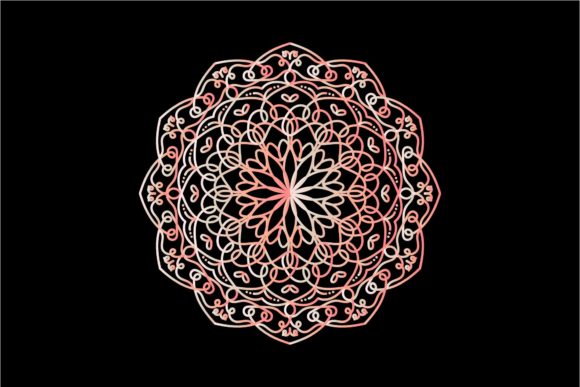
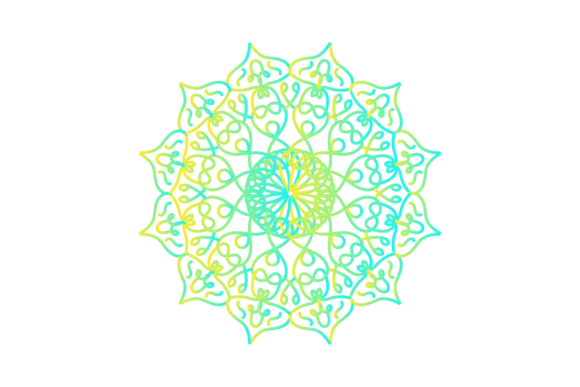
When I opened Floral Mandala Ornament, I didn’t see just another icon—I saw a design with presence. Its circular symmetry, layered petals, and subtle negative space create calm authority—not fussy, not minimal, but deeply intentional. As a designer who’s stitched hundreds of mandalas for baby onesies, boutique tea towels, and custom aprons, I immediately sensed its versatility. It reads as both modern and timeless, delicate but structurally sound—exactly what you want when building trust through handmade product quality.
How It Performs on Real Embroidered Products
I tested Floral Mandala Ornament across three real projects: a linen tote bag for a local herbalist, a soft cotton baby blanket, and a midweight organic sweatshirt for a small-batch apparel brand. On the tote, it stitched cleanly at 4.5" diameter—no puckering, no thread breaks. The outer floral ring held crisp satin stitch definition, while the inner mandala motifs stayed legible without overcrowding. On the baby blanket, I scaled it down to 3.25"; even then, the central motif retained enough clarity for gentle recognition—not “cute,” but quietly meaningful.
For the sweatshirt, I used medium cutaway stabilizer and adjusted tension slightly for the knit’s slight give. The design responded well—no distortion in the curved petal edges, and the fill stitch density felt balanced: rich enough to read from three feet away, breathable enough not to stiffen the fabric. That balance matters. Too dense, and you lose drape; too sparse, and it reads like a sketch, not a finished embroidery project.
Where It Shines—and Where to Pause
- Perfect for: Tote bag design, pillow covers, nursery decor, embroidered patch backings, holiday embroidery (think ornaments or gift tags), and personalized gifts where elegance > edge.
- Strong fit for: Sweatshirt embroidery, tea towel monograms, apron accents, and boutique branding—especially when paired with serif typography or neutral palettes.
- Use carefully on: Stretchy fabrics (like ribbed knits) without proper stabilizer, thin fabrics (e.g., voile or lightweight rayon) where fill stitch may show through, and dark fabric without testing thread contrast first. Also avoid scaling below 2.75" unless your machine handles fine detail reliably—some inner linework risks merging at tiny sizes.
What It Adds to Your Handmade Product—and What It Doesn’t
Floral Mandala Ornament elevates perceived value without shouting. It doesn’t scream “trendy”—which is why it works so well for Etsy sellers building long-term brand consistency. Customers notice the care in the spacing, the rhythm in the repetition, the way light catches the satin-stitched curves. That translates directly to higher perceived professionalism and stronger buyer engagement, especially for personalized gifts and wedding-related items (think guestbook covers or keepsake sachets).
It won’t carry your entire brand—but it *supports* it beautifully. As a standalone embroidery file, it’s strong enough for a featured placement (center chest, upper back), but subtle enough to pair with text or other motifs without visual competition. And because it lives comfortably in the Icons category—not overly illustrative or narrative—it scales gracefully across digital embroidery file uses: printable mockups, social media previews, and even simplified vector derivatives for packaging or labels.
Practical Notes Every Embroidery Designer Should Check
- Test on scrap fabric first—especially if using textured weaves (like burlap or heavy linen) where tight fill stitch can lift or snag.
- Review stitch density before hooping. Dense areas near the center may benefit from reduced underlay or slight digitizing tweaks if your machine hesitates.
- Confirm hoop size compatibility. At native scale (1920px × 1280px canvas), this isn’t a tiny icon—it’s built for impact. Know your maximum embroidery area before scaling up.
- Inspect small details in vector preview (AI/EPS). Are inner lines clean? Do intersecting petals have consistent stroke weight? These affect stitch-out fidelity more than you’d expect.
- Try black-and-white mockups to assess contrast and hierarchy—especially important if selling digital embroidery files or pre-made patches.
- Compare light and dark fabric backgrounds. This design relies on shape and rhythm more than high-contrast outlines, so thread color choice is part of the design decision—not an afterthought.
- Use appropriate stabilizer: medium cutaway for knits, tear-away for stable wovens, and optional topping for napped fabrics like terry cloth.
- Verify licensing terms before selling finished products or bundling as design assets. Since this is listed as a Graphics product, confirm commercial use rights apply to your intended output—especially for craft business or Etsy seller workflows.
A Final Thought for Creative Entrepreneurs
If you’re choosing Floral Mandala Ornament for a client’s custom apparel order, a holiday collection, or your next batch of embroidered patches—you’re selecting quiet confidence over flash. It won’t distract from your brand voice; it’ll reinforce it. It’s the kind of embroidery file that makes customers pause, tilt their head, and say, “This feels special.” And in a market flooded with rushed digital embroidery files, that kind of resonance is rare—and worth every stitch.