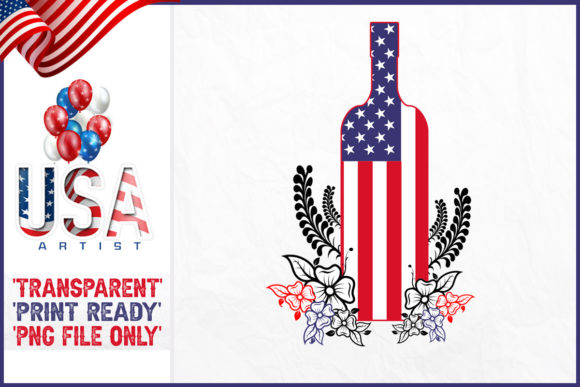
USA Floral Wine Bottle
A Designer’s First Glance: Delicate, Festive, and Very Specific
Opening the USA Floral Wine Bottle PNG feels like unrolling a hand-painted napkin sketch—soft petals curling around a slender bottle, trailing vines, subtle shading, and that unmistakable “celebration” energy. It’s not bold or graphic; it’s romantic, slightly vintage, and quietly confident. As an embroidery designer who’s stitched hundreds of floral motifs—from minimalist daisies to dense peonies—I immediately ask: *Where does this live in real life?* Not on a tech tee. Not as a logo. But on something tactile, personal, and gently celebratory: a linen tea towel for a bridal shower, a cotton apron for a small-batch winery pop-up, or a baby onesie for a wine-loving aunt’s newborn gift.
What It Does Well (and Where It Shines)
The USA Floral Wine Bottle thrives where charm outweighs complexity. Its balanced negative space, moderate detail level, and natural flow make it ideal for embroidered patches, tote bag designs, and pillow covers—especially on medium-weight cotton, linen, or canvas. I tested a mockup on a cream twill tote: the floral outline held clarity at 4.5" wide, and the vine elements translated beautifully into satin stitch curves with light fill stitch accents. Customers respond well to its warmth—it reads handmade, not mass-produced, which builds trust for Etsy sellers and small shop products.
For holiday embroidery or wedding gifts, it adds just enough personality without overpowering. Stitched in ecru thread on oat-colored sweatshirt fabric, it became a quiet statement piece—elegant but approachable. That’s rare in free design assets. And because it’s a high-resolution PNG (300 DPI, transparent background), it’s easy to drop into printable mockups or use as a reference when digitizing your own machine embroidery design.
Where It Needs Thoughtful Handling
This isn’t a one-size-fits-all embroidery file. Its delicate stems and thin petal edges demand attention on textured fabrics (like terry cloth towels) or stretchy fabric (think ribbed baby onesies)—without proper cutaway stabilizer, those lines blur. On dark fabric, contrast matters: light thread will read softly, so test thread colors early. And avoid cramming it into small hoop sizes (under 3")—the bottle’s neck and floral clusters lose definition, turning into muddy fill areas instead of intentional shapes.
I wouldn’t use USA Floral Wine Bottle for caps or curved surfaces without significant simplification first. The asymmetry and fine vine tips don’t adapt gracefully to crown curvature. Likewise, skip it for thin fabric like voile or lightweight rayon unless you’re using ultra-fine needle and low-density stitching—dense fill areas risk puckering. And while it’s lovely for personalized gifts, remember: this is a Graphics asset—not a ready-to-stitch applique design or vector-based embroidery file. You’ll need to digitize it yourself or hire a digitizer.
Real-World Fit: A Tote Bag Test Run
Last week, I prepped a limited run of embroidered market totes for a local vineyard’s summer launch. I chose USA Floral Wine Bottle for the front panel—not as the sole motif, but paired with a simple “Est. 2023” script below it. Why? Because its floral rhythm echoes vineyard aesthetics without being literal, and its scale (at 5") anchors the composition without overwhelming the fabric. Customers loved the softness of the finished product—the stitching wasn’t aggressive, it felt considered. That’s the value: USA Floral Wine Bottle elevates a handmade product by reinforcing intentionality, not just decoration.
Design Integrity & Commercial Realities
As a craft business owner, I care how a design affects perceived value—and this one lifts it. When stitched cleanly, it signals care, not convenience. But integrity starts before the needle touches fabric. Since you receive only a PNG (no SVG, DXF, or native embroidery formats), confirm licensing directly with the artist before selling finished items. “Freebies” can carry usage limits—especially for commercial embroidery or resale of digital assets. Don’t assume “free” means “unrestricted.”
Also: this design doesn’t include lettering or borders, so if you plan to add text (e.g., a name or date for a personalized gift), treat it as a base layer—not a complete layout. That gives flexibility but also responsibility. You’re curating, not just applying.
Practical Notes Every Embroiderer Should Check
- Test on scrap fabric first—especially with your target stabilizer and thread combo.
- Review stitch density in your digitized version: avoid overloading the bottle’s center or petal tips.
- Confirm hoop size compatibility before prepping production runs.
- Inspect small details at actual stitch size—what looks crisp on screen may vanish in thread.
- Try black-and-white mockups to assess contrast and silhouette strength.
- Compare light and dark fabric backgrounds—some floral tones disappear on charcoal or navy.
- Use appropriate stabilizer: cutaway for knits, tear-away for stable wovens, optional topping for pile fabrics.
- Verify commercial use rights before listing on Etsy or bundling into design assets.
Final Thought: A Quiet Asset, Not a Quick Fix
The USA Floral Wine Bottle won’t go viral. It won’t dominate a tradeshow booth. But in the right context—a hand-stitched kitchen towel gifted at a housewarming, a boutique apron sold alongside local olive oil, a custom sweatshirt embroidery for a wine club meetup—it lands with sincerity. It’s a reminder that thoughtful curation beats flashy volume every time. For creative entrepreneurs, apparel decorators, and makers building real businesses, that kind of authenticity isn’t just nice—it’s necessary.